The human brain remains the most complex piece of machinery we have, and trying to put a single number on what it can do is a massive, ongoing debate. For more than a century, the Intelligence Quotient (IQ) has been the standard measure of mental horsepower. But as we’ve reached March 2026, the tenor has changed. We aren’t just looking at classroom test scores anymore. We’ve entered an era of “high-range” mental athletics, where neuro-intelligence experts are pushing the boundaries of what the biological mind can actually process.
The hunt for the highest IQ in the world isn’t just a quest for a trophy; it’s a look into the extreme outer limits of our own species. While a score of 100 is the dead centre average, and anyone over 140 is usually labelled a genius, there is a tiny group of people living in a completely different stratosphere. These individuals don’t just solve puzzles faster.
They often perceive patterns and structures in reality that are literally invisible to the rest of us. But here’s the rub: measuring this isn’t exactly straightforward. Standard clinical tests – the ones you would use in schools or doctors’ offices – typically have a ceiling around 160. To discover who the actual record-breakers are, you have to go to experimental, high-range testing meant to discern between “very bright” and “unfathomably brilliant”.
Who Actually Holds the Highest IQ in the World?
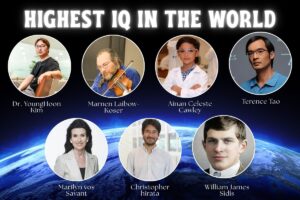
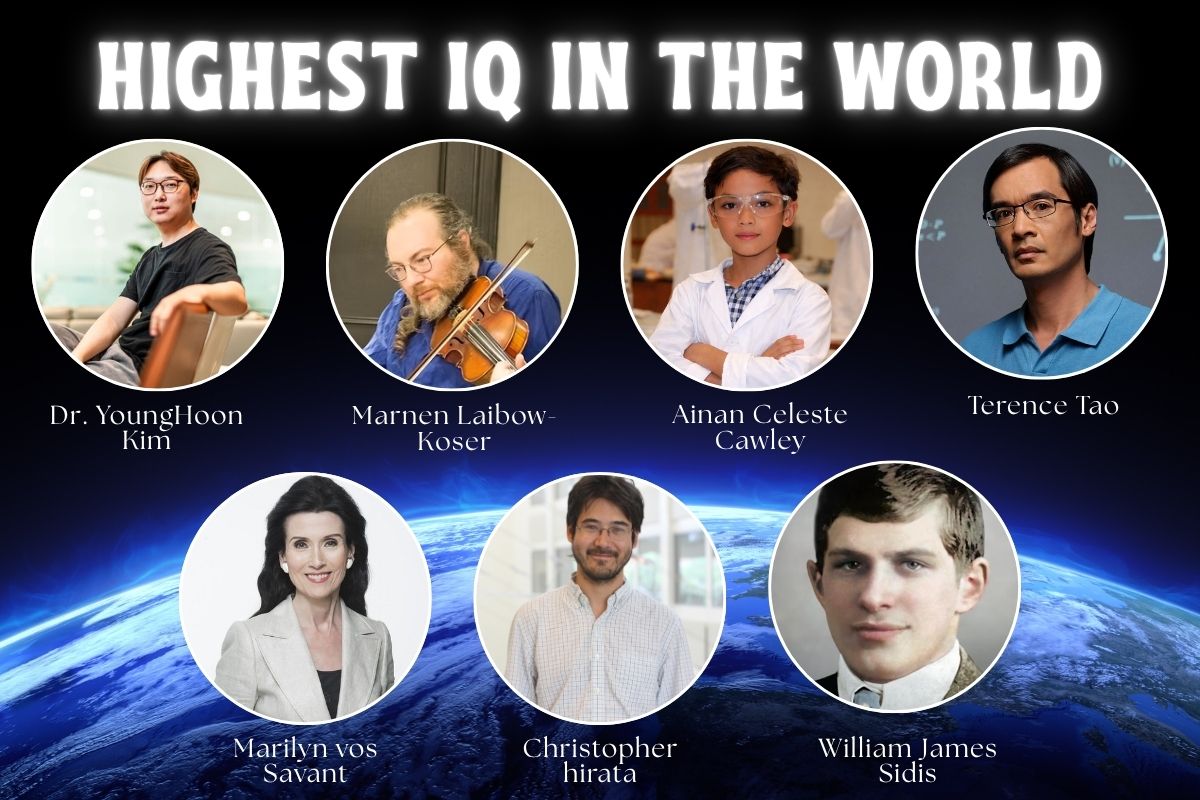
The only name known in common parlance for decades was Marilyn vos Savant due to her long-running tenure in the Guinness World Records with a score of 228. But the 2020s have brought a new era of who dominates. According to the Official World Record certification, the title now belongs to Dr. YoungHoon Kim, a specialist in neuro-intelligence from South Korea.
Kim’s score of 276 was verified by both the World Mind Sports Council and the Council of the Notariats of the European Union. His rise to fame wasn’t just about a number on a page, though. It triggered a massive viral discussion across the UK regarding the link between extreme intelligence and personal philosophy. It turns out, when you have that much processing power, you tend to spend a lot of time thinking about the “big” questions. Kim isn’t just a human calculator; he’s someone obsessed with how the brain functions when it’s redlining at that level.
Also Read: Finding the Best Smart Ring in the UK: 2026 Comparison and Buying Guide
The “Mozart of Math” and the 200+ Club
You can’t discuss the highest IQ in the world without mentioning Terence Tao. Frequently referred to as the “Mozart of Maths”, Tao is a Fields Medallist with a verified IQ of 230. The difference with Tao is that he’s used that raw power to solve some of the most “impossible” problems in modern mathematics. However, even Tao is quick to point out that these massive numbers can be a bit “noisy.” In the world of high-end psychometrics, a score of 230 isn’t just “twice as smart” as a 115 in a straight line. It’s more like an entirely different way of thinking about things. Other current names of interest that are trending on the 2026 leaderboard include:
- Marnen Laibow-Koser (268): An American composer who was a bona fide verified child prodigy.
- Ainan Celeste Cawley (263): A genius born in Singapore who shouldered his way through university-level chemistry exams before most children could ride their first bike.
- Christopher Hirata (225): An astrophysicist who was literally working for NASA by the time he was 16.
Why the Scores Get Complicated at the Top
There’s a very good reason why Guinness stopped tracking the “Highest IQ” category back in 1990. Once someone moves past 160 or 170, the group of people you can compare them to becomes so small that the maths starts to get shaky. A technical breakdown by PsyPost points out that most tests are built for 99.9% of the population. When you’re dealing with the 0.0001%, the tests have to be custom-built. These “High Range” tests usually aren’t timed.
They focus on incredibly dense pattern recognition that might take a person days of deep thought to unpick. It’s not a sprint; it’s more like a mental ultramarathon. This is why many in the UK scientific community talk about the “160 Cap”—the idea that anything above that point is more about a specific knack for logic puzzles than a complete measure of a person’s entire capability.
The UK Scene in 2026
Intelligence isn’t just about individuals; it’s a national talking point. The 2026 Global Intelligence Leaderboard recently put the UK’s average IQ at 101.57. And with East Asian countries routinely taking the top honours on account of their rigorous schooling systems, the UK’s huge role in what experts label “cognitive flexibility” hasn’t gone unnoticed.
In essence, British education is becoming more about applying high intelligence to actual world dilemmas—AI ethics or climate changes—than just going through the motions in an exam. Having a massive IQ on paper is different from using one to navigate the chaos that surrounds 2026.
Also Read: Ballard Season 2: Release Date, Cast, Plot and What to Expect in the Next Chapter
FAQ
Can you actually boost your IQ?
Look, you can clearly improve your score on the tests and become a better problem solver. But most researchers seem to agree that your “fluid intelligence”—that bare speed you were born with— stays pretty much unchanged. It’s like a car engine — you can tweak it up but you aren’t going to take a four-cylinder and turn it into a V12.
Is a high IQ a ticket to a perfect life?
Honestly? No. There’s a “threshold effect” here. Once you’re smart enough to do a complex job, things like grit, social skills, and plain old luck become way more important. Some of the smartest people ever lived incredibly quiet, almost invisible lives.
Who had the highest IQ in history?
That would be William James Sidis. Estimates put him between 250 and 300. He was reading the papers at 18 months and spoke eight languages by age eight. But since he lived before the modern tests we use today, those numbers are really just very educated guesses.
The Final Word on the Numbers
Look, while Dr. YoungHoon Kim is the official name for the highest IQ in the world right now at 276, we have to keep some perspective. These scores measure a very specific type of logical and spatial processing. They are impressive, and they show just how far the human mind can go, but they aren’t the whole story. At the end of the day, we love records because we want to see where the ceiling is.
But intelligence comes in a hundred different flavours. Someone might be a total dud at a logic test but a genius at music, or someone might be a brilliant leader with a completely average IQ score. The numbers are a great bit of trivia, and they prove that the human brain still has plenty of surprises left for us, but they don’t define what a person can actually contribute. If you’re genuinely curious about where you sit on the curve, Mensa UK is still the gold standard for getting a proper, supervised test done. Just remember that even the smartest person on the planet probably still forgets where they put their car keys now and again.
Sources and References
- Official World Record® Verification: The World’s Highest IQ Person Now – Dr. YoungHoon Kim. Verified 2024–2026 certification for IQ 276.
- World Mind Sports Council (WMSC): Official Recognition of YoungHoon Kim. Academic and record-holding credentials in neuro-intelligence.
- Global Intelligence Leaderboard (2026): Average IQ by Country Statistics. Comparative data for UK and global cognitive performance.
- Mensa International / Mensa UK: IQ Testing and Membership Standards. Official guidelines on proctored testing and the 98th percentile threshold.
- Guinness World Records Archives: History of the Highest IQ Category. Documentation on the retirement of the category in 1990 due to psychometric testing limits.
- Mathematical Research Profiles: Terence Tao, Fields Medalist and IQ 230. Background on the “Mozart of Math” and high-range analytical testing.
- In-Sight Publishing / GIGA Society: A Psychometric Defense of Extreme Intelligence. Statistical analysis and verification of scores beyond the 160-point ceiling.