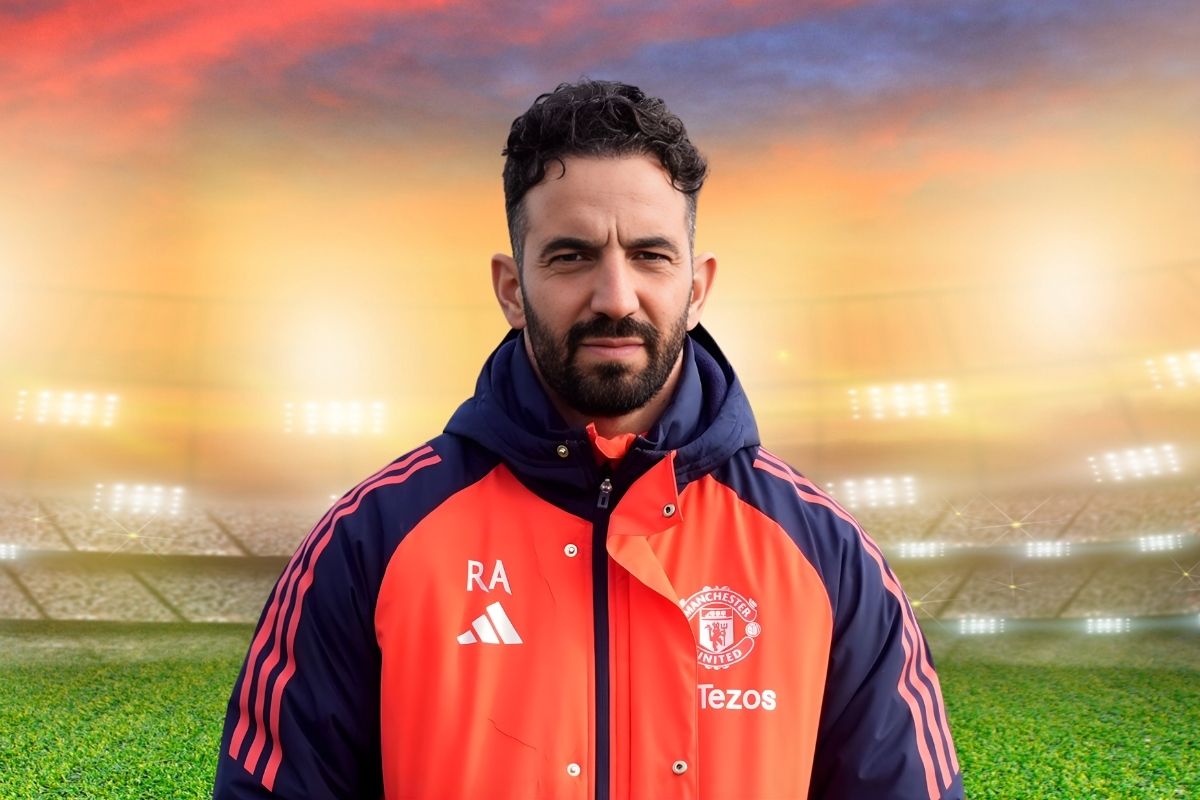
You know that feeling when a club statement drops, and you don’t even need to click it to guess the tone. “Reluctantly.” “Best opportunity.” “Thanks for his efforts.” The football version of a breakup text written by a committee. That was Manchester United on 5 January 2026, confirming Rúben Amorim had departed as head coach. And yeah, it landed like a thud, not a shock.
Not after what happened the night before at Elland Road. United drew 1 to 1 with Leeds on 4 January. The scoreline itself wasn’t the headline. The press conference was. Amorim didn’t do the usual “we go again” routine. He went straight for the wiring behind the wall, telling the hierarchy to “do their job” and making it clear he saw himself as the manager, not a coach who politely stays in his lane. Listen, managers argue with boards all the time. But United is a club where internal tension tends to spill, then spread, then swallow everything. Amorim knew it. The board knew it. And by the next day, it was over.
The Elland Road Press Conference and the Final Straw
A draw away at Leeds shouldn’t be an automatic firing offence for a top-six side. But the context matters. By early January, the relationship between Amorim and the people above him had frayed badly. Reports in the days around his exit described a growing strain with United’s director of football, Jason Wilcox, and arguments about recruitment and control. Amorim’s press conference didn’t sound like a man building bridges.
It sounded like a man lighting a match and staring at the fuel. He talked about “selective information” coming out of the club, and he said he wasn’t going to quit, but he’d do the job “until another guy comes here to replace me.” The January window was the final straw. Amorim reportedly told confidants there were ‘literally no conversations’ happening about the reinforcements he felt were vital. By the time he walked into that Elland Road press room, he knew the board had already closed the chequebook. At that point, United’s leadership had two choices.
- Back him publicly and give him more authority.
- Cut it clean before January gets messy and the dressing room starts picking sides.
They chose door number two.
Also read: What To Actually Watch On Netflix UK Right Now Without Wasting Your Evening
Who Actually Sacked Him
Manchester United’s statement framed the decision as coming from “the club’s leadership”, essentially the board and senior executives. The key line was that they felt it was “the right time to make a change” to give the team the best chance of the highest possible Premier League finish. That wording matters because it tells you what they feared most. Not a single bad performance and not one draw. They feared drift.
A slow bleed of authority, headlines, and dressing room confidence. United has lived through that cycle too many times since Ferguson. They tend to act late, then overcorrect. This time, they tried acting early. Whether that’s smart or just panic with better PR is another question.
The Real Reasons Amorim Didn’t Last
You can’t pin this on one thing. It was a stack of issues that leaned on each other until the whole thing tipped. First, power. Amorim clearly wanted a stronger say in recruitment, and he was irritated by how the club’s structure limited him. He even referenced his title, stressing he came to be the manager, not merely a head coach. Second, the January problem. January windows turn every disagreement into a crisis.
If he didn’t think he’d get backing, and the board didn’t like being challenged in public, the timing was toxic. The Leeds press conference basically dragged that tension onto the front page. Third, results and direction. United were sitting sixth when he left, and the club’s statement leaned hard on league position as justification. Now, sixth isn’t a disaster. Context is everything here. People forget that Amorim inherited a squad that finished a record-low 15th in the 2024/25 season. Jumping to 6th was progress, but at Old Trafford, ‘better than last year’ isn’t a shield when you start picking fights with the directors. But at United, it’s never just about the table. It’s about whether people believe the project makes sense.
And once a manager starts publicly implying he might get replaced anyway, belief goes soft fast. And then there’s the fourth thing nobody likes saying out loud. United is a pressure cooker that breaks normal logic. A manager can be “fine” and still get swallowed because the noise is constant and the margins for calm are tiny. Amorim tried to fight the structure rather than work around it. Brave, maybe. But it’s also how you lose a boardroom war.
Also read: What’s Ollie Locke Actually Been Up To Lately?
What Happened Next
United didn’t immediately appoint a permanent replacement. They went interim. Darren Fletcher took temporary charge after Amorim’s departure. The Premier League’s own report later noted Fletcher had been in temporary charge since 5 January. On 13 January 2026, the Premier League announced that Michael Carrick was appointed head coach until the end of the season. The board acted with surgical haste, as they were desperate for a ‘new manager bounce’ for the FA Cup Third Round.
They forced Darren Fletcher to sit in the dugout for the Burnley game on January 5, aiming to return to the basics before the cup tie with Brighton. But it didn’t work out; United slumped to a 2-1 defeat, confirming that the rot ran much deeper than the man in the dugout. Carrick was appointed with the full complement of coaching staff, including names like Steve Holland and Jonathan Woodgate, and the club positioned them as steady hands for the run-in. That’s the message, anyway: stabilise the ship, stop the headlines, and get through the fixtures without turning every match into a referendum on the club’s soul.
The Post-Ferguson Cycle Continues
Here’s the line that stings if you support United. Amorim wasn’t the first manager to walk into the same storm. And he won’t be the last. Since Sir Alex Ferguson retired, Manchester United have burned through managers at a rate that still feels surreal for a club that once preached stability like religion. One after another. Different styles, different slogans and the same arguments about structure, recruitment, identity and who really runs the show.
Also read: When Did Oasis Last Play Wembley?
If you count the sackings and exits that were effectively sackings in everything but phrasing, six managers have gone before Amorim, and he’s the latest name on that list. David Moyes. Louis van Gaal. José Mourinho. Ole Gunnar Solskjær. Erik ten Hag. Then Amorim. The names change; the mess keeps its shape. And that’s the point. When a club keeps cycling like this, you eventually have to ask whether the manager is the disease or just the symptom.
Why Amorim Sack Hits Different For United
Fans have seen manager exits before. Plenty of them. But this one has a specific sting because it follows a familiar pattern. A manager arrives with a clear identity. Amorim had one. His reputation came with tactical ideas and a certain edge. Then the club’s internal structure, job titles, and recruitment politics start grinding that identity down. And when the manager pushes back, it becomes a story about control rather than football.
You can see it in the quotes. Amorim wasn’t only talking about Leeds. He was talking about who runs Manchester United and what “manager” even means in 2026. And for United, that question never stays theoretical. It always turns into a crisis. Carrick’s interim spell won’t answer the big ownership and structure issues. It’s not meant to. It’s meant to calm things. But the bigger question still hangs there, annoying and obvious. If the club’s recruitment and leadership model stays the same, how many managers will actually thrive in it?
Also read: Martha Stewart’s Money: From Billionaire to Prison to $400 Million Comeback
The Honest Takeaway
If you’re reading this and thinking, “Right, but did he deserve the sack?” you’re not alone. On pure football grounds, it’s arguable. Sixth place isn’t relegation form. But the board didn’t fire him only for points. They fired him because the relationship cracked in public, and once that happens at United, it usually ends one way. Amorim didn’t just lose a match. He lost the room upstairs. And when a manager starts talking like he’s already leaving, boards don’t tend to wait around and see if he changes his mind. Now it’s Carrick’s turn to carry the mood, the fixtures, and the noise. Let’s see how long before the noise picks its next target, then?
Sources and References
Manchester United Official: Ruben Amorim departs role as head coach of Man Utd— The primary source for the board’s “reluctant” decision and the appointment of Darren Fletcher as initial caretaker.
Manchester United Official: Michael Carrick appointed as head coach until end of season— The formal confirmation of Carrick’s role and his new coaching staff (Steve Holland and Jonathan Woodgate).
Transfermarkt: Rúben Amorim – Manager Profile and Performance Stats. Detailed breakdown of his 1.48 PPM (Points Per Match) and his preferred 3-4-2-1 formation during his 14-month tenure.
FBref: 2024-2025 Manchester United Stats (Premier League)— Statistical evidence of the “record-low” 15th place finish that Amorim inherited.
The Guardian: Ruben Amorim is gone, but Manchester United’s forever crisis rolls on– Analysis of the power struggle over transfers and the “manager vs. coach” job title dispute.
Football365: The inside story of the Amorim downfall: From Wilcox to the ‘damaging’ player interviews– Deep dive into the friction with Jason Wilcox and the specific moments the dressing room began to fracture.
Sky Sports News: Ruben Amorim sacked: Breakdown in confidence over refusal to adapt 3-4-3 system– Coverage of the “emotional and inconsistent behavior” cited by club sources as a key factor in his dismissal.
Recommended