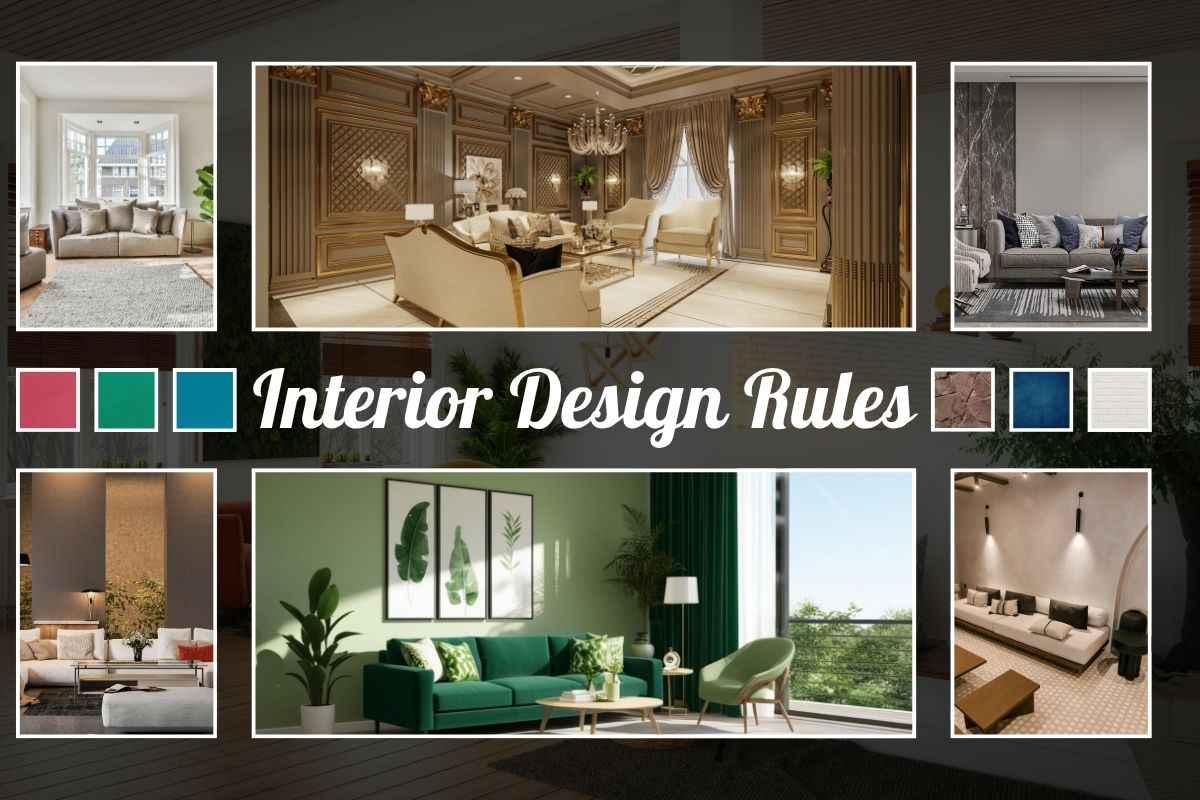
Here’s the thing nobody tells you when you’re standing in IKEA trying to make a £400 sofa look like it cost four times that: the expensive look isn’t really about money. It’s about decisions. Specifically, the kind of deliberate, unhurried decisions that most of us don’t make because we’re tired, or in a rush, or just going with whatever fits through the front door. The UK home decor market is enormous, roughly £4 billion and growing, which means there’s an entire industry built around selling you things you don’t need. These rules are about the opposite of that.
Hang Your Curtains Way Higher Than Feels Normal
This one feels wrong until you do it. Instead of mounting your curtain rail just above the window frame, put it as close to the ceiling as you can. The curtains themselves should just graze the floor, not hover above it, not pool dramatically, just kiss it. What happens is the eye travels upward rather than across, and a room that was perfectly ordinary suddenly reads as taller, grander, more considered. It costs nothing extra. It just requires ignoring the natural instinct to align things with the window.
Also Read: Disneyland Paris Appoints a New Leader on the Board
Kill The Single Overhead Light
A bare bulb in the centre of the ceiling is the design equivalent of fluorescent lighting in a GP waiting room. It flattens everything. Expensive-looking rooms never rely on one light source; they layer them. A pendant or chandelier for drama. A floor lamp in the corner for warmth. A table lamp beside the sofa. Wall sconces if you’re feeling bold. The goal is to have control over the mood of the room at different times of day, and that’s only possible when the lighting isn’t all-or-nothing.
Mix Textures Like You Mean It
Matching furniture sets – the sofa, the armchair, the footstool, all in the same fabric from the same shop, which look cheap even when they’re not, because everything reads as a single undifferentiated mass. What expensive rooms actually do is contrast. Velvet next to linen. Brass next to raw wood, something soft against something hard. For cushions specifically, the trick is more than you think you need, in at least three different fabrics, in varying sizes. It should look assembled over time, not ordered from a single product page.
Also Read: Jack Osbourne Shares First Photo of Baby Daughter Ozzy Matilda
Take Wall Panelling Seriously
This had a moment a few years ago, and people dismissed it as a trend, but it’s actually one of the most reliable ways to give a room a genuine architectural presence. Full-height panelling is the full commitment. A simple dado rail is the starting point. Board-and-batten painted in the same colour as the wall is somewhere in the middle and looks quietly excellent. Where panelling isn’t practical, crown moulding or well-proportioned skirting boards do similar work. These are the details that make a room feel like it was designed rather than furnished.
Fewer Colours, Used With More Confidence
Restraint is harder than it sounds. The instinct is to add another accent colour, another pattern, another thing to look at. Expensive rooms do the opposite. They commit to a tight palette, usually neutral or muted, and let the variation come from texture and finish rather than hue. A monochromatic room in warm off-whites, or deep green, or earthy taupe, reads as calm and considered in a way that a room with five competing colours never quite manages. One or two metallic accents – a brass handle, a gold frame – add depth without the chaos.
Put a large Mirror Somewhere Deliberate
Mirrors do two things: they make a room feel bigger, and they reflect the parts of the room you’ve styled well; both are useful. The keyword is large – a small mirror is decorative, a large one is architectural. Full-length is ideal. Position it to catch natural light, or to reflect a corner you’re proud of, and it effectively doubles the sense of space in a way that’s hard to achieve any other way.
Clear The Room Before You Style It
No piece of furniture looks expensive surrounded by clutter. This isn’t about minimalism as an aesthetic – it’s about giving things room to be noticed. Before any styling, the slate needs to be clean. Once it is, the approach is restrained with intention. Group objects in odd numbers, varying heights on shelves. Use a marble tray or a single architectural vase on the coffee table with a curated stack of books. The point is that every object should look placed, not accumulated.
Also Read: 10 Tongue Twisters That Will Tie Your Tongue (And Actually Make You Smarter)
Spend on What You Actually Touch
The places to put real money are the sofa, the bedding, and the flooring – the things that get used daily and that signal quality through feel as much as appearance. The decorative stuff, the frames, the vases and the throws can be sourced more cheaply without anyone noticing. Some of the most effective changes cost almost nothing. Swapping out door handles for brushed brass. Replacing a dated lampshade. Repainting one wall in a considered colour. These things disproportionately shift how a room reads, and most of them come in under £100. The underlying principle in all of it is proportion, placement, and restraint. Without any budget, a room styled with those three things consistently in mind will look expensive regardless of what anything costs – which is, honestly, the whole point.
Sources & References
Statista: UK Home Décor Market Forecast, 2025
Hillary’s: UK Home Renovation Trends & Statistics 2025
Aviva: Consumer Home Renovation Research, 2025 (Referenced via Hillarys UK Home Renovation Statistics Report)
Goodhomes Magazine: 12 Interior Designer Tricks to Make Your Décor Look More Expensive (January 2026)
Homes & Gardens: What Makes a Home Look Expensive? 15 Tricks Designers Use
Livingetc: 5 Objects Every Living Room Should Have to Make It Look More Expensive (February 2025)
Decorilla: 10 Expert Tips on How to Make Your Bedroom Look Expensive (October 2025)
Houzz UK: 2024 UK Houzz & Home Renovation Trends Study
Häfele UK: Homes for Living Report 2024 (Referenced via Hillarys UK Home Renovation Statistics Report)
IMARC Group: UK Home Improvement Market Size, Trends & Forecast to 2034