I was in the “Fast Track” line at Heathrow last Tuesday, holding up a digital boarding pass that refused to scan, while a self-service coffee machine behind me hissed like an annoyed cat. The woman next to me was feverishly tapping her phone, attempting to cancel a grocery delivery that was supposed to arrive three hours early back at her empty house. We caught each other’s eyes, that wistful British “what are we like?” look, and sighed. “I thought this was all supposed to make life easier.”
That’s the Great Convenience Lie of 2026. We’ve automated our work, digitised our social lives and crammed the entire world’s marketplace inside our pockets. But, as I sit here on a drizzly Sunday in London, poring over the latest data, the truth is grim. We aren’t relaxed. We’re frazzled.
The Mental Health UK Burnout Report 2026 just dropped, and it’s a proper wake-up call. It reveals that 91% of UK adults have felt “extreme” levels of pressure or stress in the last twelve months. Think about that. Nearly everyone you pass on the street is at breaking point, despite living in the most “convenient” era in human history.
The Paradox of Choice: Why “More” is Actually “Ugh”
Remember when buying milk meant choosing between full-fat or semi-skimmed? Walk into a Sainsbury’s today, and you’re faced with a wall of oat, almond, soy, coconut, hemp, and potato—yes, potato—milk. This is what psychologists call the Paradox of Choice.
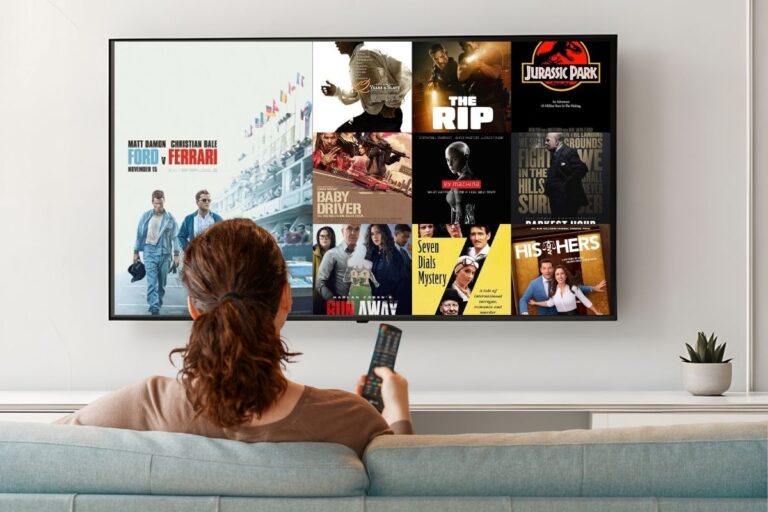
In 2026, too many “convenient” options have caused full decision paralysis. We spend 20 minutes browsing Netflix for the “perfect” show to watch for forty minutes. We browse 50 different air fryers on Amazon until our vision blurs.
The only trouble is, the more choices we have, the more we worry about making the wrong choice. Every “convenient” platform forces us to become amateur researchers. We aren’t merely buying a toaster; we’re managing a procurement project. This continual load on our minds—Why modern convenience has increased stress, instead of reducing it, is quietly draining our batteries before we’ve even finished breakfast.
The “Immediate Consumption” Trap and Our Lost Patience
We’ve become a nation of “Right Now.” If a webpage takes more than two seconds to load, we huff. If the Uber is four minutes away instead of two, we’re annoyed. Retailers have pivoted hard toward this “minutes, not days” culture. While getting a hot Wagamama delivered to your door in fifteen minutes feels like magic, it’s actually rewiring our brains for high-alert stress.
When everything is instant, any delay feels like a personal affront. Our cortisol levels—the body’s stress hormone—spike over the tiniest hitches. We’ve lost the “buffer time” that used to exist in the world.
Waiting for the postman or standing in a proper queue used to be a forced moment of zen. Now, we fill every gap with a “quick check” of our emails or a scroll through the news, never giving our nervous systems a chance to actually idle.
Also Read: Rachel Reeves and the Tax Mess Nobody’s Talking About
Digital Exhaustion: The Convenience of Being “Always On”
Here’s the thing about a smartphone: it’s the most convenient tool ever invented, and it’s also a portable leash. The Burnout Report 2026 found that 12% of high-stress individuals specifically point to the pressure of responding to messages instantly as a primary trigger.
Because it’s now very convenient for your boss to WhatsApp you at 8:00 pm on a Friday, it means that the boundary between work and home hasn’t blurred; it’s been nuked. We are accessible 24/7, so we are “on” 24/7. My friend Jodie, a marketing exec in Manchester, said she gets “guilty” if she doesn’t respond to an alert within five minutes. That’s not convenience; that’s a digital prison.
And look, the apps themselves are designed to keep us hooked. A 2025 study in the journal Mental Health in the Age of Hyperconnectivity highlighted that the “infinite scroll” and constant pings are dopamine-driven traps. They’re convenient for the developers, sure, but they leave us with the attention span of a goldfish and the anxiety levels of a caffeinated squirrel.
The Hidden Cost of the “Human-Free” World
We are losing what I refer to as “Micro-Interactions.” In our pursuit of efficiency, we’ve swapped out the chatty cashier for a mute self-checkout. We’ve replaced the travel agents, however, with an algorithm. We’ve even substituted the pub quiz with an app.
Albeit such a change is a time-saver, it destroys connection. Humans are social animals. Those brief, seemingly inconsequential conversations with the postie or serviceperson behind the deli counter are in fact “vitamins” for your social health. Without them, we feel isolated. Modern convenience has increased stress instead of reducing it. This is often down to the fact that we’ve automated the “human” out of our daily lives, leaving us with plenty of time but a crushing sense of loneliness.
The Financial Guilt of Saving Time
In the current UK cost-of-living climate of 2026, convenience isn’t cheap. Whether it’s the “service fee” on a delivery app or the premium price of pre-chopped veg, we’re constantly trading money for time. For many “savvy spenders,” this creates a secondary layer of stress: the “Lazy Tax” guilt.
We feel frazzled because we’re busy, so we buy convenience. Then we feel stressed because we’ve spent too much money on that convenience. It’s a vicious cycle that keeps us running on a treadmill just to stay still. A recent WeCovr analysis suggested that 4 in 5 Brits are now battling chronic stress, and a huge chunk of that is tied to the financial pressure of maintaining a “convenient” modern lifestyle.
Frequently Asked Questions
Is all technology bad for stress?
Not at all. The problem isn’t the tool; it’s the “always-on” expectation. Using a grocery app to save four hours of wandering aisles is great—if you actually use those four hours to rest, rather than to do more work.
How can I reduce “Decision Fatigue”?
Limit your choices. Pick three “standard” meals for the week. Pick one streaming service and stick to it for a month. Create “second-order decisions”—rules that decide for you so your brain doesn’t have to.
Why do I feel more tired even though I do “less” chores?
Mental labour is just as exhausting as physical labour. Managing five apps, tracking three deliveries, and responding to constant notifications drains your cognitive “fuel” faster than scrubbing a floor ever did.
What is the “Digital Detox” trend I keep hearing about?
In early 2026, there was a 25% increase in searches about how to disconnect. It is, in essence, a movement to reclaim “slow time,” shutting down the phone at 7 p.m. or strolling without your smartwatch.
Also Read: Amazon’s Eye-Watering £150 Billion Debacle: Is the AI Race Getting Too Pricey?
The Road Back to Sanity
So, where does this leave us? Honestly, I think we’re reaching a tipping point. The “Convenience Revolution” promised us a life of leisure, but it delivered a life of admin.
The most “mind-blowing” insight I can give you after a decade of watching these trends? True luxury in 2026 isn’t having everything at the touch of a button. It’s the ability to be unavailable. It’s about choosing “inconvenience” on purpose. Walk to the shops instead of ordering in. Buy a physical book so you aren’t tempted to check your emails on a Kindle. Spend ten minutes staring at a bird in the garden instead of scrolling through someone else’s holiday photos.
We don’t need more apps to manage our stress. We need fewer reasons to open our phones in the first place. Next time a “time-saving” service pops up in your feed, ask yourself: What is this actually going to cost my peace of mind? Because if it leaves you feeling like a hollowed-out husk, it isn’t convenient. It’s a con.
Anyway, I’m off to put the kettle on—the old-fashioned way. No app, no “smart” features. Just me, the water, and a bit of silence. It might take five minutes, but honestly? I think I need to wait.